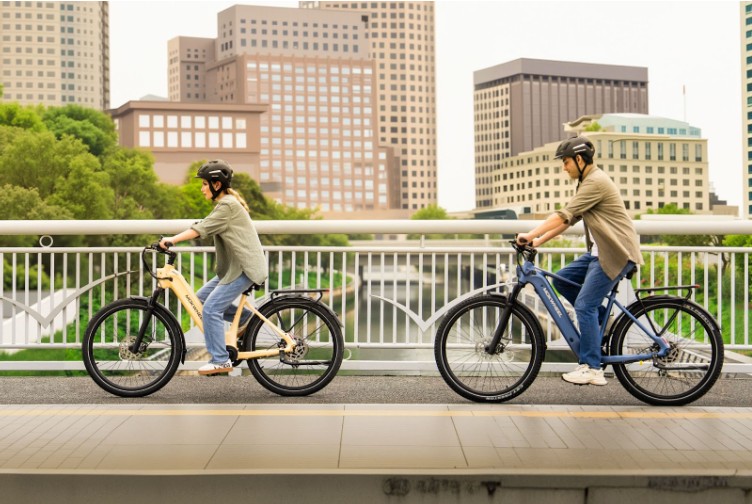
In many cities, commuting is no longer just a fixed daily routine—it has gradually become a continuous drain on energy. Rush-hour congestion, unreliable public transportation, and the rising cost of getting around have turned “getting to work” into something that affects how people experience their entire day.
Against this backdrop, a growing number of urban residents are re-evaluating how they commute and beginning to consider an option that was once seen mainly as a substitute rather than a primary solution: the commuter ebike.
When Efficiency and Comfort Need to Coexist
In a commuting context, speed alone does not solve the problem. Cars are constrained by traffic, public transit depends on fixed schedules, and traditional bicycles place a physical burden on riders when used every day.
What makes commuter ebikes increasingly appealing is their ability to strike a balance between efficiency and comfort. Electric assist lowers the physical barrier to riding, while more independent routes allow commuting time to remain relatively predictable.
For many office workers, the appeal is not about riding as fast as possible, but about stability—knowing when they will leave, when they will arrive, and being able to complete the ride without excessive fatigue.
What Commuter-Focused Electric Bikes Typically Prioritize
When electric bikes are used for high-frequency commuting, the way they are evaluated tends to change.
Rather than looking for the most powerful specifications, riders often care more about whether a bike can remain stable, comfortable, and low-stress over long-term daily use.
Riding posture and handling stability are often the first differences riders notice.
A more upright position, balanced frame geometry, and tires or suspension tuned for city streets all influence how the body feels after repeated rides. For daily commuters, this comfort matters more than peak speed.
A battery range that matches real commuting patterns is another key consideration.
In everyday use, riders are less concerned with maximum theoretical range and more focused on how often charging is required. Consistent, predictable battery performance reduces uncertainty and helps riding fit more naturally into work and life routines.
Practical features designed for everyday use often determine whether a bike truly works for commuting.
Racks, fenders, and lighting may seem minor, but they directly affect whether a bike can handle changing weather, carrying items, and riding during early mornings or evenings. These details make commuting possible beyond ideal conditions.
There Is No Single Definition of the “Right” Commuter Ebike
Urban commuters are not a single group. Some ride the same route to the office every day, others travel shorter distances but ride frequently, and some want one bike that can handle weekday commuting as well as weekend city riding or daily errands.
Because of this diversity, commuter ebikes designed around multiple use scenarios are often easier to live with long term than bikes built for a single purpose. Many electric bikes aimed at urban riders attempt to balance commuting comfort with everyday flexibility rather than focusing on one extreme riding scenario.
When People Begin Seriously Exploring Commuting Alternatives

As commuting becomes one of the most energy-consuming parts of daily life, many people begin actively researching better transportation options. At this stage, searching for commuter ebikes or browsing electric bikes is often less about immediate purchasing and more about evaluating whether this mode of transportation can realistically fit into long-term daily life.
In these decisions, short-term cost is rarely the only factor. What matters more is whether the bike can consistently reduce the physical and mental strain of commuting over time.
As Commuter Electric Bikes Blend into Everyday City Life
As more people use electric bikes for daily commuting, urban transportation patterns are quietly shifting. Commuter ebikes are no longer seen only as temporary alternatives, but are gradually becoming stable, everyday options that fit into real city life. For many riders, commuting itself begins to feel different—less like something to endure, and more like a routine with a clear rhythm and manageable effort.
When people seriously consider this type of commuting, they often start not by choosing a specific model, but by reflecting on their own situation: how far they ride, what road conditions they face, and whether they need to stop or move the bike frequently.
It is through this kind of comparison that content around different electric bikes becomes useful—not as direct purchase guidance, but as reference material for identifying designs that better align with individual commuting habits.