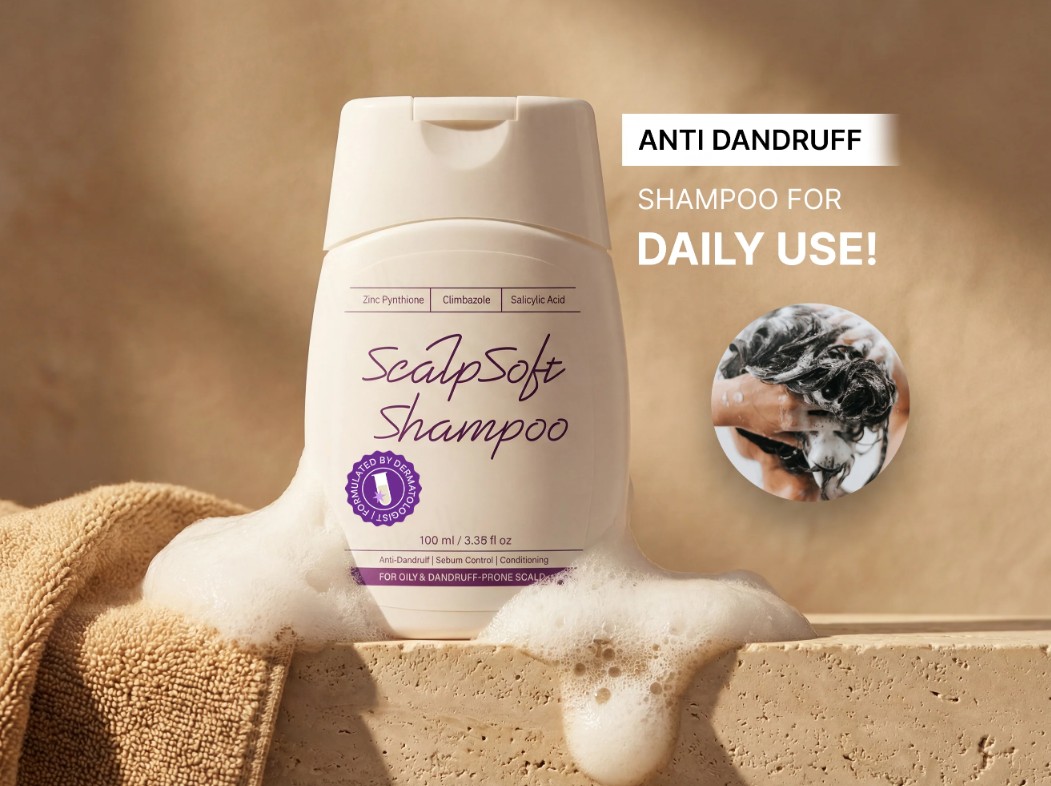
Dandruff often starts as a few flakes on a dark shirt, but for many people, it can sometimes turn into a recurring cycle of itching, buildup, and visible scaling. One wash might seem to work, but the flakes come back in days. This is where you can get help from an anti-dandruff shampoo that contains salicylic acid. Salicylic acid works on the scalp itself to help remove excess dead skin and oil that cause stubborn flaking. The trick is knowing who actually benefits from it and when another approach may be more suitable.
How Salicylic Acid Fights Dandruff
Salicylic acid is a beta-hydroxy acid (BHA) commonly used in dermatology for its exfoliating properties. It acts as a keratolytic agent on the scalp, meaning that it helps to loosen and remove the layer of dead skin cells, which can build up as flakes. When dandruff is accompanied by oily buildup, these dead cells tend to stick together and form visible scales.
Salicylic acid penetrates into the oily layer on the scalp and helps to break apart this buildup, making it easier to wash away during cleansing. Dermatologists often recommend salicylic acid in scalp treatments because it can:
- Reduce thick, persistent flakes
- Helps remove excess oil & residue
- Improve the effectiveness of cleansing
- Minimise the feeling of scalp congestion
Remember that salicylic acid is mainly effective on buildup and scaling. If dandruff is also linked to an overgrowth of Malassezia yeast, many formulas blend salicylic acid with an antifungal ingredient for better scalp care.
Who Should Use a Salicylic Acid Anti-Dandruff Shampoo?
If you’re fighting excess oil, visible flakes, or stubborn buildup (as opposed to just dryness), a shampoo that contains salicylic acid is typically most helpful.
You may benefit from it if:
Your scalp becomes greasy a day or two after washing:
Excess sebum production can trap dead skin cells that stick to the scalp rather than shedding naturally, causing flakes. Salicylic acid helps to loosen this buildup and makes it easier to remove during a hair wash.
You see white or yellowish flakes sticking to the roots:
The roots, hairline, or crown areas tend to trap oil, sweat, and product build-up. A salicylic acid shampoo can help to break up the layer of dead skin that forms there.
You have mild to moderate dandruff that keeps coming back (even if you shampoo regularly):
If the flakes come back within a few days, the issue may be persistent scalp buildup rather than inadequate cleansing. Therefore, it can be better to exfoliate the scalp than simply wash more frequently.
Your scalp feels itchy and congested.
This kind of buildup is common in people who frequently use dry shampoos, leave-in products, hair serums, or styling creams near the scalp. Salicylic acid helps shed the surface layer, which can cause irritation and itching.
You are looking for an effective anti dandruff shampoo for women to treat flakiness and oily roots:
Women who use heat styling tools often, use hair products, and have a buildup of sebum around the scalp are likely to get dandruff. Salicylic acid formula can effectively control visible flakes without using harsh cleansing formulas.
For example, someone washes their hair often, but still has flakes around the hairline and crown area. In that situation, an anti-dandruff shampoo with salicylic acid may be more suitable than a basic shampoo, as it targets the accumulated buildup that can cause flakes.
Who Should Avoid It or Use It with Caution?
Salicylic acid is a good choice for oily, flaky scalps, but it can be too strong for some people.
Use with caution if:
- Your scalp is very dry or sensitive: In this case, exfoliating can cause increased tightness, irritation, or peeling.
- You have broken skin or active inflammation: Applying salicylic acid to irritated areas can cause stinging.
- You have chemically treated or recently colored hair: Frequent use of Salicylic acid formulas can make the scalp feel drier, so a gentler shampoo is usually safer.
- You already use medicated scalp treatments: Combining several active ingredients without guidance can lead to increased irritation.
- You are buying a shampoo for a child: For pediatric scalp conditions, active treatments should be assessed by a health care professional prior to use.
Tip: If you have a sensitive scalp, apply a small amount behind the ear or on a small area of the scalp and wait 24 hours before full use.
What to Look for in the Formula
Salicylic acid works best when it’s part of a balanced formula, and not just as the sole active ingredient. Useful dermatologist-recommended ingredients to pair with salicylic acid are:
- Piroctone olamine: Helps fight yeast associated with dandruff.
- Niacinamide: Strengthens the scalp barrier.
- Biotin: Helps strengthen the scalp barrier and supports healthier hair from the roots.
- Aloe Vera: Helps calm irritation and reduce itching. This makes it especially beneficial for an itchy scalp, while maintaining moisture balance and preventing dryness.
- Glycerin or Panthenol: Helps to reduce post-cleansing dryness.
Zinc pyrithione-based shampoos are another commonly used formulation type to manage dandruff. One example is Bare Anatomy Anti Dandruff Shampoo with Salicylic Acid, Piroctone Olamine & Biotin, which combines salicylic acid with an antifungal ingredient and Biotin in a sulphate-free dandruff shampoo.
It gently exfoliates and refreshes the scalp while maintaining the scalp’s natural pH balance. Sulphate-free formulas are gentler on the scalp while still delivering active ingredients for dandruff control.
How to Use It the Right Way
Salicylic acid works best when it has sufficient contact time with the scalp. Many people apply an anti-dandruff shampoo and then rinse it off straight away, which can reduce the effectiveness of the active ingredients. Follow this routine:
1. Wet the scalp thoroughly
Make sure the scalp, not just the hair lengths, is thoroughly saturated with water.
2. Apply a coin-sized amount directly onto the scalp
If you have thick or long hair, divide the hair into 3-4 sections so that the shampoo reaches the roots.
3. Massage gently for 30-60 seconds
Use your fingertips, not your fingernails, to massage the scalp. Scratching may also irritate the scalp and make inflammation worse.
4. Leave it on for 2–3 minutes
This allows the salicylic acid to break up dead skin build-up before rinsing.
5. Rinse thoroughly
Sometimes product residue can be left on your scalp (especially if you have sensitive skin) and can cause irritation, so make sure to rinse the scalp thoroughly.
Use it 2-3 times a week in the beginning. Do not use a salicylic acid scalp shampoo on the same day as other exfoliating scalp products, unless your dermatologist has told you to.
Conclusion
Dandruff isn’t the same for everyone. If your scalp gets oily fast, flakes at the roots, or feels coated with buildup, a shampoo with salicylic acid can help. It exfoliates the scalp and removes the layer of dead skin that regular cleansing may not be able to get rid of. If you have a very dry, irritated, or damaged scalp, you may need to seek the advice of a dermatologist before using active treatments.
A simple way to judge if it is working is to look for fewer flakes on the scalp and shoulders, less itching, and a cleaner-feeling scalp after washing. Consistent use a few times a week is usually more helpful than using it daily.