Some rooms feel slightly off even when there is nothing obviously wrong with them. The sofa is centred. The furniture fits. The colours work together. Yet one wall feels heavy while another looks almost forgotten. A tall cabinet may sit on one side, a small picture on the other, and several unrelated objects compete for attention in between.
The issue can be the way the wall itself has been used. Bookshelves and wall shelves offer a practical way to correct this. Instead of adding more furniture to the floor, they allow books, photographs and everyday objects to occupy the vertical area of the room. More importantly, their position can give the eye a clearer sense of order.
The goal is not perfect mirror image symmetry. A room can feel balanced without having identical objects on both sides. What matters is how height, empty space and visual weight are distributed across the wall.
1. Why Wall Layout Plays a Bigger Role in Creating Visual Balance
We tend to notice furniture first when arranging a room. Walls often come later. A sofa is positioned, followed by the coffee table and chairs. Once everything on the floor has found a place, attention turns to the empty wall behind it. A picture goes up. Perhaps a shelf is added later. Then another object fills a gap. That gradual approach can leave the wall feeling disconnected from the rest of the room.
Imagine a living room with a tall bookshelf on the far left and two small frames towards the right. The individual pieces may look perfectly fine, but their scale is very different. One side carries much more visual weight. The answer is not necessarily to buy an identical bookshelf for the other side.
A smaller wall shelf placed at a suitable height may provide enough balance. So might a group of frames or another wall based element. The important thing is to look at the entire wall rather than treating each empty patch as a separate decorating task.
Stand at the entrance to the room occasionally. What attracts your eye first? Does one side look considerably fuller? Is everything concentrated at the same height? These simple observations often reveal more than looking at each shelf individually.
2. The Small Design Choices That Can Make Walls Feel Uneven
A wall can feel busy without containing very many objects. Spacing is usually part of the reason.
Three shelves placed too close together can look like one dense block. Put the same shelves farther apart and the arrangement may feel lighter. A large gap between two unrelated pieces can have the opposite effect, making them appear as though they were positioned without considering each other. Height creates similar problems.
If every frame and shelf sits around eye level, the upper part of the wall may feel empty while the middle becomes crowded. If everything is positioned high, the furniture below can appear detached from the wall arrangement. Then there is the furniture underneath.
A shelf should not be judged against an empty wall if a sofa, console or study table will eventually sit below it. The widths and positions of those pieces affect how the wall above them is perceived.
Before drilling holes, try marking shelf positions with removable tape. Step away and look from different parts of the room. A placement that seems correct while standing directly in front of the wall can look noticeably uneven from the doorway. It is a small test that can prevent a lot of unnecessary repositioning.
3. Using Vertical Space to Create Order Without Losing Style
Floor space is limited. Wall space is often less used. That makes vertical storage particularly helpful in rooms where books and smaller belongings need somewhere to go, but another cabinet would make the floor feel crowded.
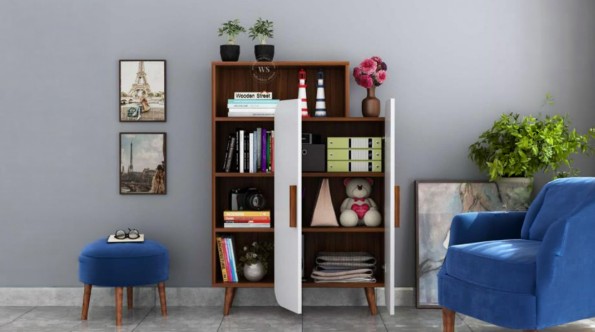
A bookshelf can make use of height while keeping books together in one clear area. It can also accommodate a limited number of photographs or decorative objects, provided the shelves do not become a collection point for everything that lacks another home. The proportions still matter. A tall bookshelf squeezed into a narrow gap may technically fit, yet look too heavy for that part of the room. A shorter or narrower option could sit more comfortably with the furniture around it.
Anyone considering a bookshelf can explore Wooden Street while paying attention to height, width, shelf spacing and available floor area. Think about what will actually be stored there as well. A collection of large books has different shelf requirements from paperbacks, photographs and smaller objects.
It also helps to leave some room for the collection to change. Books arrive gradually. So do photographs and keepsakes. Filling every centimetre on the first day leaves nowhere for those later additions to go.
4. Creating Symmetry by Combining Different Levels of Wall Storage
Symmetry does not require two identical shelves facing each other. In many rooms, that can look unnecessarily rigid.
A more natural arrangement can come from balancing different heights. For example, a tall bookshelf on one side of a wall can be visually answered by two smaller wall shelves on the other. The pieces are different, but neither side feels abandoned or excessively heavy.
Floating shelves are useful for this because they can occupy wall areas where floor standing furniture would be inconvenient.
The space above a desk is one example. So is the wall beside a television unit or an otherwise unused section near a reading chair.
When comparing floating wall shelf at Wooden Street, consider the dimensions of the wall as carefully as the shelf itself. A small shelf can disappear on a very broad wall, while a long arrangement may overpower a narrow section. Placement should also take nearby doors, windows and furniture into account.
Try planning the whole composition before installing the first shelf. Mark the bookshelf outline on the wall if one is being used. Then mark the proposed floating shelves. Seeing the complete arrangement together makes it much easier to judge whether the two sides carry similar visual weight. Sometimes shifting one shelf by a few centimetres is enough to make the layout feel settled.
5. Styling Shelves to Keep the Room Balanced and Visually Calm
Once shelves are installed, there is a temptation to fill them. Books go in first. Then come photographs, candles, small plants, souvenirs and the decorative object that had nowhere else to live. Before long, the shelving itself is barely visible.
Leaving space between objects can be just as important as deciding what to display. Books do not all have to be arranged in exactly the same way. Some can stand upright while a small stack lies flat. A photograph can occupy part of another shelf without needing a second object beside it simply to fill the gap.
Pay attention to where heavier groups appear. If one side of a bookshelf contains several dense rows of books while the other has only two small objects, the arrangement may feel lopsided. Moving a few items around can correct that without introducing anything new.
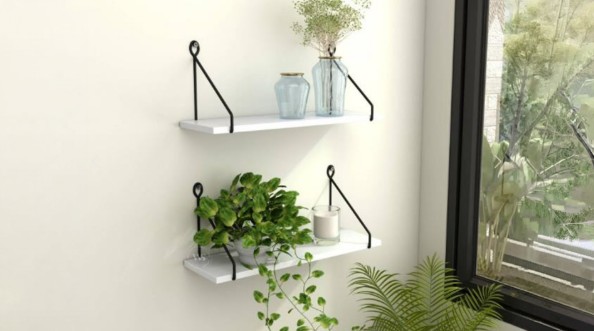
The same applies when several floating shelves share a wall. Avoid placing the largest object at the same end of every shelf. Spread visual weight around and allow some sections to remain relatively quiet.
Personal objects are what keep shelves from looking like showroom displays. A favourite book, family photograph or item collected during a trip has a reason to be there. Not every shelf needs a theme.
6. A Better Wall Layout That Makes the Entire Room Feel Complete
Improving a wall does not always mean putting more things on it. Sometimes the useful change is simply arranging what is already there with greater care.
Look at height first. Then spacing. Notice how the wall relates to the sofa, desk, television unit or other furniture below it. If one side feels heavy, consider whether a smaller shelf or another wall based element could restore balance without adding another large piece to the floor.
Bookshelves can provide vertical storage for items that genuinely need it. Floating shelves can use smaller sections of wall and help distribute objects across different heights. Used together, they can bring order to a wall without making every section identical.
There is also value in leaving some wall visible. Empty space separates one group of objects from another and makes the overall arrangement easier to read. It gives books, photographs and personal pieces room to stand on their own.
A balanced wall is rarely about perfect measurements or matching everything in pairs. It is about reaching the point where nothing looks noticeably missing, and nothing seems to be fighting for space.